

Author:
Scite AI Review
Scite AI is a revolutionary research intelligence platform that helps researchers, academics, and students evaluate the credibility and impact of scientific literature through smart citation analysis.
Unlike traditional search engines that simply count citations, Scite provides context-aware insights by analyzing how papers cite each other, showing whether citations are supporting or contrasting the original findings.
This innovative approach helps users quickly assess research quality, discover relevant papers, and understand the broader scientific conversation surrounding any given study.
With features like the Research Assistant, browser extensions, and comprehensive metrics, Scite has become an essential tool for over 1 million researchers worldwide who need to navigate the complex landscape of scientific literature efficiently and effectively.
What is Scite AI?
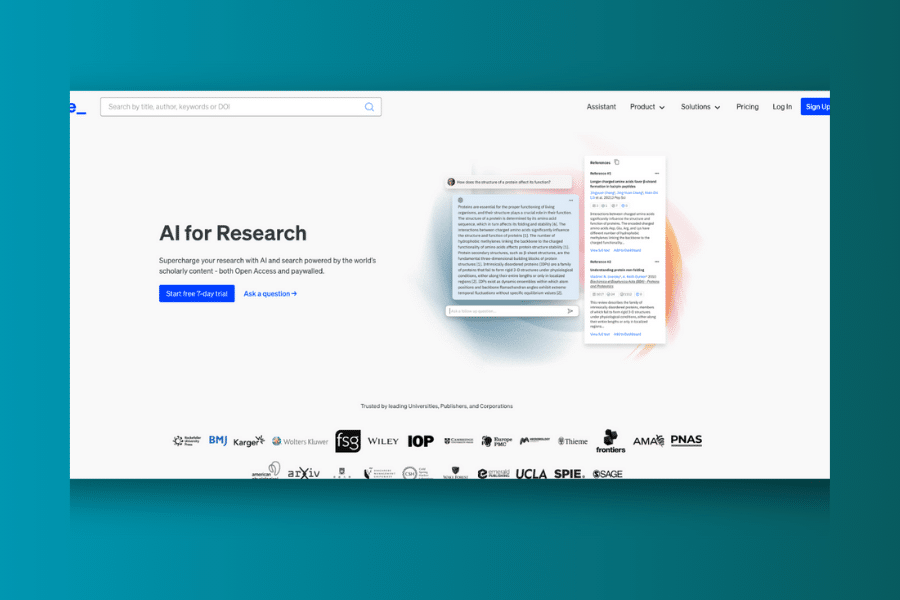
Scite AI is a powerful research intelligence platform that revolutionizes how researchers interact with scientific literature.
At its core, Scite functions as an advanced search engine for scholarly papers, but it goes far beyond traditional citation counting. The platform creates a comprehensive index of citations from thousands of research papers, analyzing the context in which each citation appears.
What makes Scite unique is its ability to classify citations as either supporting or contrasting the original research. This smart citation analysis helps users understand not just how many times a paper has been cited, but how other researchers have actually used and evaluated the work.
The platform employs sophisticated artificial intelligence and deep learning technologies to automatically analyze citation contexts and provide meaningful insights about research credibility.
The platform serves as a bridge between raw scientific data and actionable research insights, helping users evaluate the quality and impact of scholarly work more effectively than ever before.
Whether you’re conducting a literature review, assessing the credibility of a study, or tracking research trends in your field, Scite provides the tools and context needed to make informed decisions about scientific literature.
Who Created Scite AI?
Scite AI was created by Josh Nicholson and Yuri Lazebnik, two visionary researchers who recognized the limitations of traditional citation analysis. They understood that simply counting citations wasn’t enough to truly evaluate research quality, as papers could be cited negatively or in contexts that actually contradict their findings.
The platform originally started as a project called Scintilla before evolving into the current Scite platform. Nicholson and Lazebnik’s goal was to create a tool that would help researchers, publishers, and librarians better understand the context and credibility of scientific literature. Their innovative approach leverages cutting-edge artificial intelligence and machine learning technologies to classify citations and provide meaningful insights about research impact.
The creators’ vision extends beyond just helping individual researchers. They aim to improve the overall quality of scientific discourse by making it easier for everyone to evaluate research credibility and understand the broader scientific conversation surrounding any given topic.
Top Benefits of Scite AI
Scite AI offers numerous advantages that make it an invaluable tool for researchers, students, and academic professionals:
Contextual Citation Analysis
Unlike traditional tools that only count citations, Scite provides context-aware insights by showing whether citations support or contradict the original research. This helps users quickly understand the true impact and reception of scientific papers within the academic community.
Enhanced Research Quality
By providing deeper insights into scholarly literature, Scite helps researchers ensure they’re citing relevant and reliable sources. This leads to better research practices, more accurate literature reviews, and ultimately more impactful publications.
Time-Saving Discovery
Scite’s powerful search and filtering capabilities help researchers discover and evaluate scientific articles much faster than traditional methods. Users can quickly identify credible sources and assess their relevance to their research questions.
Trend Monitoring
The platform allows users to stay up-to-date with the latest research in their field and monitor how their own publications are being cited. This helps researchers track their impact and identify emerging trends in their areas of expertise.
Seamless Integration
Scite offers excellent integration with existing research workflows through browser extensions, reference manager plugins, and API access. This makes it easy to incorporate Scite’s insights into daily research activities without disrupting established practices.
Best Features
1. Research Assistant
The Scite Research Assistant acts as an intelligent research partner that can analyze any paper you’re studying. Simply paste a DOI or upload a manuscript, and the assistant automatically generates a comprehensive report showing how other researchers have cited the work. This feature provides supporting and contrasting citations, citation statements, and key takeaways about the paper’s reception in the scientific community.
2. Browser Extension
The browser extension brings Scite’s power directly to your web browser, working seamlessly with popular academic databases like Google Scholar and PubMed. This means you can access citation context without leaving the page you’re browsing, making research more efficient and streamlined.
3. Smart Citations
Scite’s flagship feature provides context-aware citation analysis that goes beyond simple counting. Each citation is classified as supporting, contrasting, or mentioning the original work, giving users a nuanced understanding of how research is being received and used by the scientific community.
4. Scite Badge
The Scite Badge serves as a visual indicator of a publication’s impact and credibility. When embedded on publisher websites or viewed in search results, these badges provide instant access to citation context, helping readers quickly assess research reliability before diving into the full paper.
5. Zotero Plugin
For researchers using Zotero for reference management, the Scite plugin provides seamless integration that displays citation context directly within the Zotero library. This eliminates the need to switch between applications and provides citation insights alongside saved references.
6. Comprehensive Metrics
Scite provides various metrics that offer a more nuanced view of research impact, including supporting and contrasting citation counts, relative citation ratios, and journal-level analysis. These metrics help researchers evaluate both individual papers and entire publications.
Pricing
| Plan | Price | Key Features |
|---|---|---|
| Monthly Plan | $20/month | Unlimited Assistant chats, Unlimited search usage, Reference Check, Custom Dashboards |
| Yearly Plan | $12/month (billed annually) | All features included, Customized data rules, Centralized billing & admin, Domain or IP access rules |
| Free Version | $0 | Limited features and usage for testing purposes |
Pros and Cons
Pros
- Revolutionary citation context analysis
- Significant time savings in research
- Improved research quality and credibility
- Excellent integration with existing tools
- User-friendly interface and workflow
- Comprehensive metrics and insights
- Strong browser extension support
- Trusted by over 1 million researchers
Cons
- Monthly subscription costs can accumulate
- Limited free version features
- Requires internet connection for all functions
- May not cover all specialized research areas equally
- Learning curve for advanced features
- Dependent on the quality of source databases
Alternatives to Scite AI
While Scite AI offers unique citation analysis capabilities, several alternatives serve different aspects of the research process:
Academic Writing Assistants
Jenni AI specializes in AI-powered writing assistance for academic content, while Paperpal focuses on refining existing academic writing with grammar and style suggestions. Grammarly provides comprehensive writing support with grammar, spelling, and style improvements.
Research Analysis Tools
Elicit directly answers research questions using information from academic papers, while SciSpace helps researchers understand and analyze scientific papers through summarization and explanation features. Yomu assists with quickly grasping main points from research papers.
Content Creation Platforms
Writesonic and Frase offer AI-powered content creation and optimization tools, though they’re more focused on general content rather than academic research. CoWriter provides AI assistance for streamlining research and writing tasks.
Personal Experience with Scite AI
After using Scite AI for several months in academic research, the platform has proven to be an invaluable addition to the research workflow. The most impressive aspect is how quickly it transforms the literature review process from a time-consuming task into an efficient, insight-driven activity.
The Research Assistant feature has been particularly valuable for evaluating the credibility of potential sources. Instead of spending hours reading through papers to understand their reception in the academic community, Scite provides instant insights into how other researchers have used and evaluated the work. This has led to more informed decisions about which sources to include in research projects.
The browser extension has seamlessly integrated into daily research activities, providing citation context directly within Google Scholar and PubMed searches. This eliminates the need to constantly switch between platforms and provides immediate insights about research credibility while browsing.
One particularly useful application has been in identifying controversial or debated topics within specific research areas. Scite’s ability to show contrasting citations has helped uncover important debates and alternative perspectives that might have been missed with traditional search methods.
Final Verdict
Scite AI represents a significant advancement in research intelligence tools, offering unique capabilities that address real problems in academic research. The platform’s ability to provide context-aware citation analysis sets it apart from traditional research tools and makes it an essential resource for serious researchers.
For researchers, academics, and students who regularly work with scientific literature, Scite AI offers tremendous value through its time-saving features, improved research quality, and unique insights into the academic conversation surrounding any given topic. The platform’s integration capabilities and user-friendly interface make it accessible to researchers at all levels.
While the subscription cost may be a consideration for some users, the time savings and research quality improvements make Scite AI a worthwhile investment for anyone who regularly conducts literature reviews or needs to evaluate research credibility. The platform’s continuous development and growing user base suggest it will only become more valuable over time.
If you’re looking to enhance your research workflow, improve the quality of your literature reviews, and gain deeper insights into scientific literature, Scite AI is definitely worth exploring. The free version provides a good opportunity to test the platform’s capabilities before committing to a subscription.
Frequently Asked Questions
What exactly are “Smart Citations” in Scite?
Smart Citations in Scite go beyond simple citation counts by showing how other researchers have actually used and evaluated a paper. They classify citations as supporting, contrasting, or mentioning the original work, providing valuable context about the paper’s reception in the scientific community.
How does Scite’s classification system work?
Scite uses sophisticated machine learning models and expert input to analyze the full text of papers and identify citation statements. The system accurately categorizes citations based on their context and relationship to the original research, providing reliable insights about research impact.
Can I use Scite with my existing research tools?
Yes, Scite offers excellent integration with popular research tools including browsers (Chrome, Firefox), reference managers (Zotero), and academic databases. They also provide APIs for custom integrations with institutional systems.
Is Scite only for academic researchers?
While academics primarily use Scite, its insights can be valuable for anyone who needs to evaluate research credibility. Publishers, librarians, students, and professionals in research-dependent fields can all benefit from Scite’s citation analysis capabilities.
How accurate is Scite’s citation analysis?
Scite’s classification system is highly accurate, using advanced machine learning models trained on large datasets of academic papers. However, like any automated system, it’s always good practice to verify critical insights through additional review of the source material.
